If you’ve recently had a tree taken down, you already know the job isn’t quite finished until that stubborn stump is dealt with. A leftover stump might seem like a small, harmless piece of wood sitting in your yard, but it can quietly cause a surprising number of problems — from safety hazards to pest infestations to a landscape that never quite looks finished. Knowing when to call for professional help, what the process actually involves, and how it compares to other options can save you time, money, and a lot of frustration.
In this guide, we’ll break down everything you need to know about stump removal: why it matters, what methods are available, how much it typically costs, and how to decide whether it’s a job for a professional or something you can tackle yourself.
Why a Leftover Stump Is More Than Just an Eyesore
At first glance, a tree stump might not seem like a big deal. It’s just sitting there, right? Unfortunately, stumps left in the ground can create a range of issues that get worse the longer they’re ignored.
Safety hazards. Stumps are a common tripping hazard, especially for children playing in the yard, guests walking across the property, or anyone mowing the lawn. Hidden under grass or leaves, a stump can easily catch a foot, a lawn mower blade, or a bike tire.
Pest attraction. Decaying wood is a magnet for termites, carpenter ants, beetles, and other wood-boring insects. Once these pests establish themselves in a stump, they don’t always stay put — they can migrate toward nearby structures, including your home, shed, or fence.
Fungal growth and disease. Old stumps often become breeding grounds for fungi and mold. Some of these fungal species can spread to healthy trees and plants nearby, putting the rest of your landscape at risk.
New growth and root suckers. Many tree species will send up new shoots from the stump or surrounding root system if the stump isn’t fully removed or treated. This can lead to a cluster of unwanted saplings competing for space, water, and nutrients in your yard.
Reduced property value and curb appeal. Whether you’re planning to sell your home or simply want a clean, polished landscape, a stump sitting in the middle of your yard doesn’t help. It limits what you can do with the space and can make an otherwise well-maintained property look neglected.
Stump Removal vs. Stump Grinding: What’s the Difference?
One of the most common points of confusion for homeowners is the difference between stump removal and stump grinding. While the two terms are often used interchangeably, they refer to two distinct processes with different outcomes.
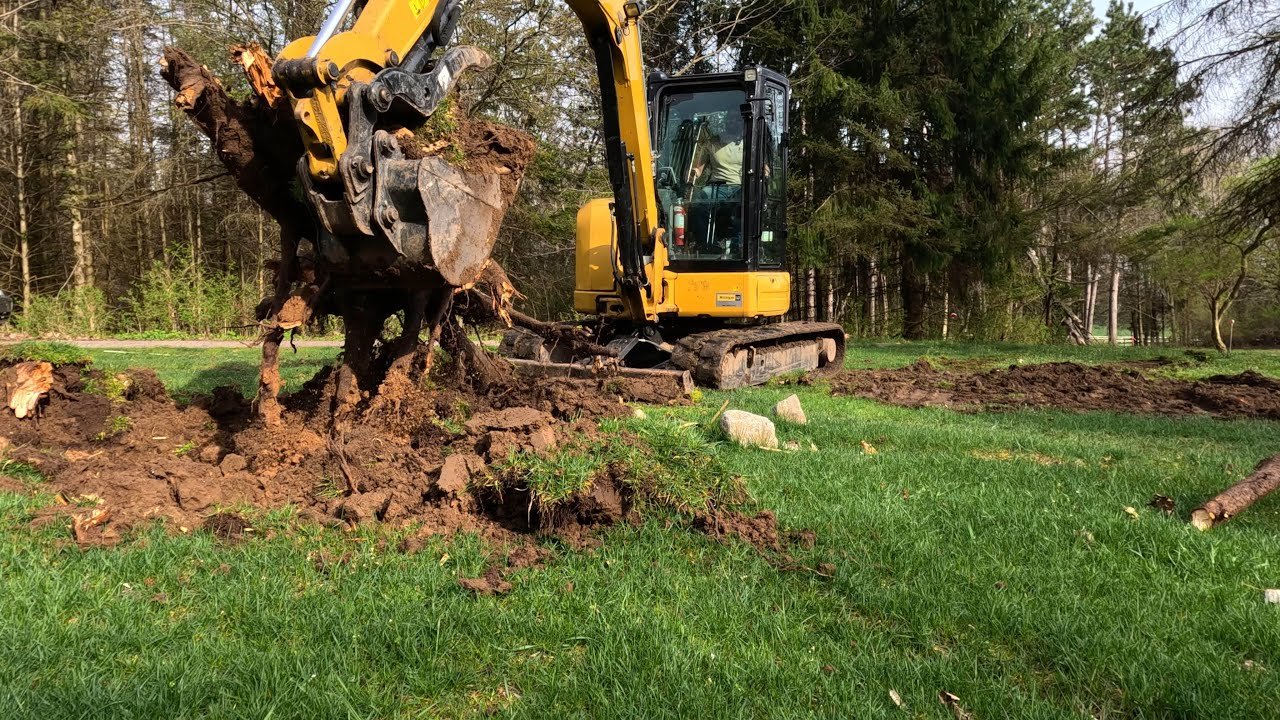
Stump removal involves extracting the entire stump, including the major root system, from the ground. This typically requires digging, cutting roots, and sometimes using specialized equipment to pull the stump free. It’s a more invasive process, but it leaves the area completely clear — ready for new landscaping, a fresh lawn, or even a new structure.
Stump grinding, on the other hand, uses a mechanical grinder to chip away the visible portion of the stump below ground level. The roots remain in the soil and will naturally decompose over time. Grinding is faster, less disruptive to the surrounding landscape, and generally more affordable, but it doesn’t clear the root system the way full removal does.
Here’s a side-by-side comparison to help you understand which option might make sense for your situation:
| Factor | Stump Removal | Stump Grinding |
|---|---|---|
| What’s removed | Entire stump and major roots | Visible stump only (roots remain) |
| Time required | Longer, more labor-intensive | Faster, usually completed same day |
| Cost | Generally higher | Generally lower |
| Yard disruption | More digging, larger hole to fill | Minimal disruption to surrounding soil |
| Best for | New landscaping, building, or planting in that exact spot | Clearing tripping hazards and improving appearance |
| Regrowth risk | Very low, since roots are removed | Low, but some species may still sprout from remaining roots |
| Cleanup involved | Requires backfilling soil after extraction | Wood chips left behind, useful as mulch |
| Equipment used | Excavators, stump pullers, or heavy machinery | Stump grinder |
Neither option is universally “better” — it depends on what you plan to do with the space afterward and your budget. If you’re planning to plant a new tree or build something in that exact location, full removal is usually the way to go. If you simply want the stump gone and the area to look clean, grinding is often the quicker, more cost-effective choice.
How Much Does Professional Stump Removal Cost?
Pricing for stump removal or grinding depends on several factors, and costs can vary significantly from one property to the next. Understanding what influences the price can help you budget accordingly and avoid surprises.
Stump diameter. Larger stumps require more time, more equipment power, and more labor, which increases the overall cost. A small stump from a young tree will always cost less to remove than a massive stump from a decades-old oak.
Root system depth and spread. Some tree species have shallow, wide-spreading roots, while others have deep taproots. Trees with extensive or particularly stubborn root systems can add time and complexity to the job.
Accessibility. If the stump is located in a hard-to-reach area — behind a fence, near a structure, or on a slope — it may require additional labor or specialized equipment, which can raise the price.
Number of stumps. If you have multiple stumps to remove, many companies offer discounted rates per stump compared to a single job, since equipment is already on-site.
Wood disposal. Whether you want the wood chips or debris hauled away, or whether you’d like to keep them for mulch, can also factor into the final quote.
While exact numbers vary by region and company, homeowners should expect quotes that reflect the complexity of the job rather than a flat, one-size-fits-all price. The best way to get an accurate number is to have a professional evaluate the stump in person, since photos or phone descriptions rarely capture the full picture.
DIY Stump Removal: Is It Worth the Effort?
It’s tempting to think you can save money by tackling a stump yourself with a shovel, an axe, or a rented grinder. And for very small, young stumps, this might be a reasonable weekend project. But for most established trees, DIY stump removal comes with more challenges than most homeowners expect.
Manual digging and cutting roots by hand can take many hours, sometimes spread across multiple days, and it’s physically demanding work. Renting equipment like a stump grinder isn’t cheap either, and operating heavy machinery without experience introduces real safety risks — from kickback injuries to accidental damage to underground utility lines, irrigation systems, or septic components.
There’s also the matter of proper disposal. Once the stump is out, you’re left with a large pile of wood, roots, and soil that needs to be dealt with, and many municipalities have specific rules about yard waste disposal.
For small stumps in open, easily accessible areas, a motivated homeowner with the right tools might handle it successfully. But for larger trees, stumps near structures or utility lines, or situations where you want the job done quickly and correctly the first time, professional help is almost always the more practical choice.
What to Expect From a Professional Stump Removal Service
Hiring an experienced crew takes the guesswork — and the physical strain — out of the process. Here’s a general idea of what a professional job typically involves:
- On-site assessment. A technician evaluates the stump’s size, species, root spread, and location relative to structures, utility lines, and landscaping features.
- Equipment selection. Depending on the situation, the crew determines whether grinding, mechanical extraction, or a combination approach makes the most sense.
- The removal or grinding process. Using professional-grade equipment, the crew grinds down or extracts the stump efficiently, minimizing disruption to the surrounding yard.
- Debris and wood chip cleanup. Most companies either haul away the resulting debris or leave wood chips behind if the homeowner wants to use them for mulch.
- Final grading. For full removal jobs, the hole left behind is backfilled with soil and leveled so the area is ready for grass seed, sod, or new landscaping.
If you’re dealing with a stump that’s been sitting in your yard for a while — or one from a recent tree removal — our team handles the entire process from evaluation to final cleanup, so you don’t have to worry about renting equipment or tackling the heavy lifting yourself.
Signs You Shouldn’t Wait to Remove a Stump
While there’s rarely an urgent emergency tied to a stump sitting in your yard, there are situations where it’s worth addressing sooner rather than later:
- The stump is in a high-traffic area where it poses a tripping hazard for kids, pets, or guests.
- You’re noticing signs of pest activity, such as sawdust piles, small holes, or insect swarms near the stump.
- New shoots or suckers are sprouting from the base and spreading into your lawn.
- You’re planning a landscaping project, new patio, or garden bed that requires a clear, level space.
- The stump is decaying and creating a soft, unstable area in your yard.
- You’re preparing to sell your home and want the property to look its best for showings.
Addressing these signs early can prevent bigger headaches down the road, whether that’s pest problems spreading to your house or a landscaping project getting delayed.
Choosing Between Grinding and Full Removal for Your Property
If you’re still unsure which option is right for your yard, ask yourself a few simple questions. Do you plan to plant something new in that exact spot, or build a structure like a shed or patio there? If so, full removal is likely necessary since roots left in the ground can interfere with construction or new plantings. Is your main goal just to get rid of the tripping hazard and clean up the appearance of your yard? In that case, grinding is often the faster and more budget-friendly solution.
It’s also worth considering the tree species. Some trees, like willows or poplars, are notorious for aggressive root systems and persistent regrowth, which may push you toward full removal even if you weren’t originally planning major landscaping changes.
A professional evaluation can help clarify the best path forward based on your specific stump, soil conditions, and future plans for the space.
Final Thoughts
A leftover stump might seem like a minor detail after a tree comes down, but it can affect the safety, health, and appearance of your entire yard if left unaddressed. Whether you choose full removal or grinding depends on your goals for the space, your budget, and the characteristics of the stump itself. While small, accessible stumps might be manageable as a DIY project, most homeowners find that professional equipment and experience make the process faster, safer, and more thorough.
If you’re ready to finally deal with that stump sitting in your yard, Access Services LLC is here to help you get it handled the right way, from initial assessment through final cleanup.